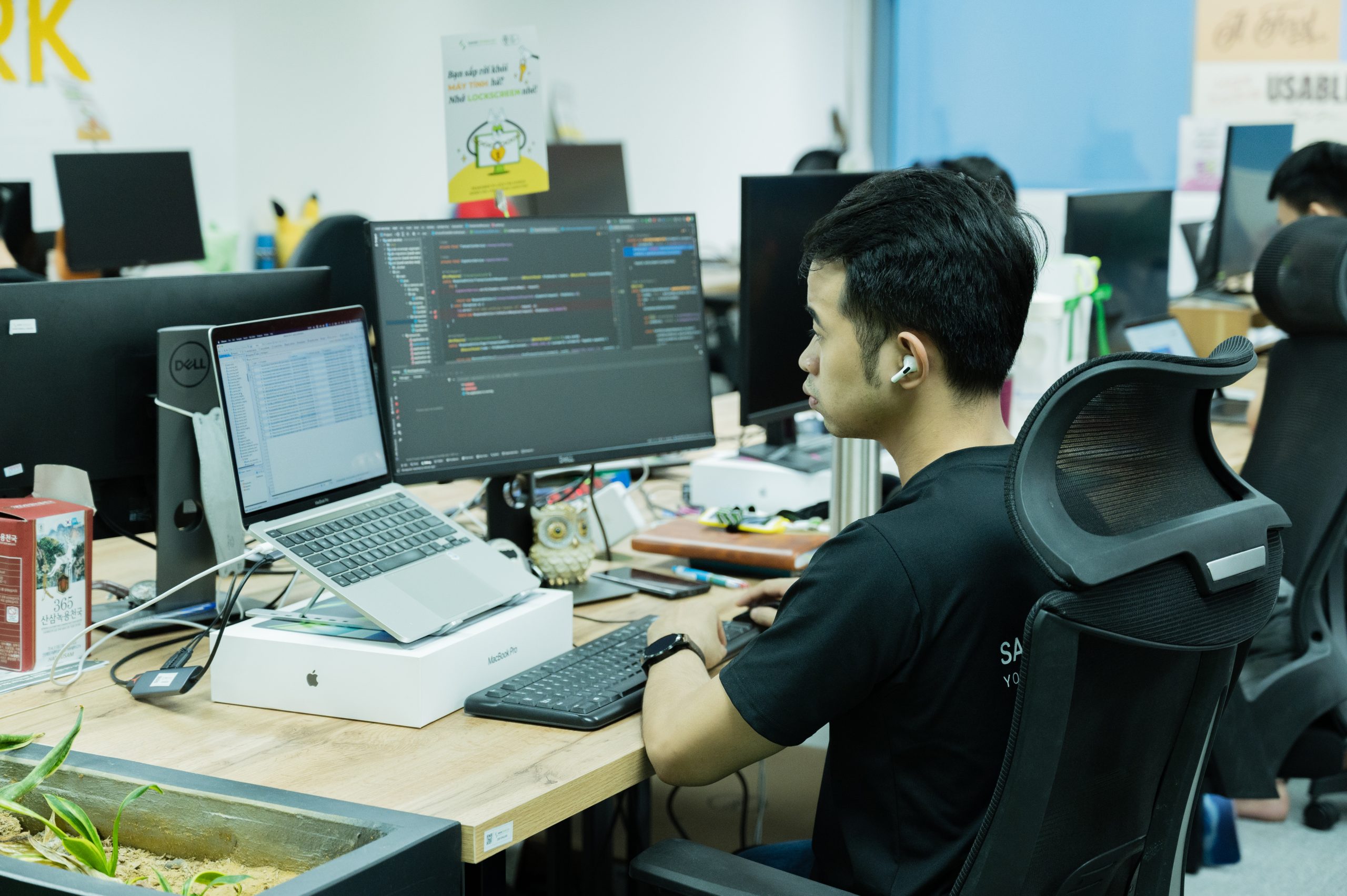
Software outsourcing is entering a new phase. For years, companies outsourced development to lower costs, add talent, and ship products faster. Those goals still matter, but the way companies reach them is changing.
AI now writes code, tests software, reviews changes, and supports delivery. At the same time, security rules, data laws, and geopolitical risks are getting harder to manage. Companies that rely on the old outsourcing playbook may pay for large teams without getting better results.
The most important software outsourcing trends in 2026 point toward a different model. Buyers want smaller expert teams, stronger governance, flexible locations, and contracts tied to real business results. Software Outsourcing Journal tracks these shifts across the market. This guide breaks down the ten trends that matter most and what each one means for your vendor decisions.
Key Takeaways
- AI is changing outsourcing from a labor model into a technology-enabled delivery model.
- Outcome-based contracts are gaining ground as buyers focus less on headcounts.
- Security, AI governance, data location, and exit rights now affect vendor selection.
- Smaller expert teams are becoming more attractive as AI handles routine development work.
- Companies are mixing outsourcing, internal teams, and capability centers instead of relying on one model.
Software Outsourcing Market Size and Statistics in 2026
The outsourcing market continues to grow despite rapid changes in how services are delivered.
Statista projects the global IT outsourcing market to reach $634.18 billion in 2026. The wider IT services market is expected to generate about $1.57 trillion.
Demand also remains strong at the enterprise level. Deloitte found that 80% of surveyed executives planned to maintain or increase third-party outsourcing investment. It also found that 83% already used AI within outsourced services.
These numbers help explain why software development outsourcing trends 2026 are not pointing toward the end of outsourcing. Instead, the market is changing how external work creates value.
This is different from many software development outsourcing trends 2025, when much of the discussion focused on generative AI pilots and coding assistants. In 2026, buyers are asking how AI changes delivery structures, pricing, contracts, security, and team size.
KPMG sees the same shift. Its research expects traditional people-based delivery to fall from 55% to 37% over two years. Software-based delivery could rise from 14% to 30% during the same period.
Top 10 Software Outsourcing Trends to Follow in 2026
The following software outsourcing trends affect more than technology choices. They change how companies select vendors, structure contracts, manage risk, and build internal teams.
1. Agentic AI Enters Delivery
Agentic AI is moving from experiments into software delivery workflows. AI agents can now take on tasks across planning, coding, testing, documentation, and incident analysis.
Gartner expects 33% of enterprise software applications to include agentic AI by 2028. It also predicts that at least 15% of daily work decisions could be made autonomously by agents.
This makes agentic delivery one of the leading software development outsourcing trends for buyers to watch.
The question is no longer whether a vendor uses AI. Buyers should ask where agents operate, what data they can access, and who reviews their output.
Strong vendors will build human reviews into the workflow. They will also track code quality, test results, security issues, and agent actions. AI should improve delivery capacity. It should not remove accountability.
2. Outcome-Based Pricing Goes Mainstream
Traditional outsourcing often links price to people, hours, or full-time equivalents. AI makes that model harder to justify.
If automation lets five engineers perform work that once required ten, buyers will not want to pay for an old staffing structure.
That is why outcome-based pricing is becoming an important outsourcing trend. Contracts can instead link fees to service levels, release goals, resolved incidents, performance improvements, or other agreed results.
KPMG reports growing demand for flexible pricing, shared risk models, and commercial terms tied to performance rather than labor volume.
However, outcome-based pricing only works when the outcome is measurable.
Both sides must define the baseline, acceptance rules, dependencies, and factors outside the vendor’s control. Poor metrics can turn a useful pricing model into a contract dispute.
3. AI Governance Becomes Contractual
AI governance is moving from internal policy into outsourcing agreements.
A vendor may use coding assistants, hosted models, autonomous agents, or third-party AI platforms during delivery. Each tool can create questions about data use, confidentiality, intellectual property, and audit rights.
Companies already use AI widely in outsourced services. Yet governance and contracting issues have limited the benefits for many organizations.
Contracts in 2026 should therefore state what AI tools are allowed. They should also define whether client data can enter external models or be used for training.
This current outsourcing trend is becoming more important as AI regulations evolve. In the EU, new AI Act transparency obligations took effect on August 2, 2026. Good governance does not block AI use. It creates clear rules for using it safely.
4. Security Gates Vendor Selection
Security is becoming a selection gate rather than a final due diligence task.
The 2026 Verizon Data Breach Investigations Report found that third-party supply chain breaches had risen sharply and accounted for 48% of breaches analyzed. Vulnerability exploitation also became the leading breach entry point.
This changes how buyers evaluate partners. A low hourly rate means little if a vendor introduces weak access controls, exposed credentials, unsafe dependencies, or poor patch practices.
Security reviews should happen before commercial approval. Buyers should examine secure development practices, identity controls, vulnerability management, logging, incident response, and subcontractor access.
This IT outsourcing trend is especially important for companies in finance, healthcare, government, and other regulated sectors. The vendor’s engineering process is now part of the client’s attack surface.
5. Nearshoring Spreads Delivery Risk
Nearshoring is becoming part of a wider location strategy.
Companies still use offshore teams for scale and cost advantages. However, many buyers no longer want critical delivery concentrated in one country or time zone.
KPMG reports that more than 70% of managed services buyers prefer an onshore delivery center within their service mix. Providers are responding with combinations of onshore, nearshore, offshore, and hybrid delivery.
The emerging trend in outsourcing is therefore diversification rather than a simple move from offshore to nearshore.
A US company might combine teams in Latin America and Asia. A European buyer may use Eastern Europe alongside teams in another region.
This model can improve time zone coverage and business continuity. It also reduces reliance on one labor market, political environment, or infrastructure zone.
6. Capability Centers Challenge Vendors
Global Capability Centers are becoming stronger alternatives to traditional outsourcing.
More companies now run their own offshore centers for engineering, data, and product work. Some have also moved selected functions back inside after years of full external delivery.
This does not mean companies are ending outsourcing. Instead, they are becoming more selective about which capabilities they own.
The trend of outsourcing is moving toward mixed sourcing ecosystems. A company may keep product architecture and sensitive AI work in its own center while outsourcing cloud engineering, testing, or specialized development.
Vendors must therefore compete with more than other vendors.
They must show why external delivery offers better speed, skills, technology, or flexibility than building the capability internally.
7. Data Sovereignty Shapes Cloud
Cloud architecture is becoming part of outsourcing governance.
Companies increasingly need to know where data is stored, processed, backed up, and accessed. These decisions can affect which cloud regions, AI models, support teams, and subcontractors a vendor can use.
Data protection rules in many markets now push in the same direction. Regulators expect clearer control over cross-border transfers and easier switching between cloud providers.
Regulated sectors face tighter requirements. Financial services, healthcare, and public sector buyers often need documented oversight of critical technology suppliers.
As a result, cloud design can no longer be separated from vendor selection.
Buyers should define residency, transfer, backup, portability, and deletion rules before development begins.
8. Senior Pods Replace Pyramids
AI is changing the shape of software teams.
Traditional outsourcing often used a pyramid. A small number of senior engineers managed a much larger group of junior developers and testers.
That structure becomes less useful when AI can handle more routine coding and test work. Delivery teams are getting smaller as a result. Compact pods of four or five engineers can now cover work that once needed a much larger group.
Demand is also shifting toward senior talent. Companies need engineers who can set architecture, review AI generated code and catch problems that automated checks miss.
Among current outsourcing software development trends, this shift may have a major effect on vendor economics. Buyers may prefer compact pods with stronger engineering judgment instead of large teams built around junior capacity.
9. Buyers Consolidate Vendor Lists
More vendors do not always create more flexibility.
A large vendor portfolio can increase contract work, security reviews, duplicated tools, integration problems, and unclear accountability.
Many enterprises are now reducing their supplier lists rather than adding to them. They shift more work to a few trusted providers while keeping niche specialists for specific technical needs.
The likely model is a smaller core vendor group supported by selected specialists. This favors providers that can support several related capabilities without becoming a closed ecosystem.
Buyers should still avoid excessive concentration. A strategic vendor should have clear exit terms, portable documentation, accessible repositories, and defined knowledge transfer. The goal is simpler governance, not dependency on one supplier.
10. Sustainability Enters Vendor Scorecards
Software vendors are increasingly being evaluated beyond cost, speed, and technical skills.
Large buyers now track emissions across their supply chains. That pressure can reach software providers through cloud use, data centers, office operations, travel, and subcontractors.
Microsoft, for example, requires certain suppliers to disclose greenhouse gas data. Its supplier program also includes emissions reduction and carbon free electricity requirements.
For software buyers, sustainability metrics may include cloud efficiency, compute use, hardware policies, renewable energy, and emissions reporting.
Procurement teams can also track outsourcing spend against energy or emissions data over time.
This will not replace security or engineering quality in vendor selection. However, sustainability can become another factor in enterprise scorecards, especially for large global companies.
Which Outsourcing Model Fits These Trends Best?
There is no single model that fits every company. The right choice depends on how much control, ownership, flexibility, and delivery responsibility you need.
A useful starting point is this comparison of staff augmentation vs software outsourcing vs hybrid.
Staff Augmentation in an AI-First Market
Staff augmentation still works when you need specific skills inside an existing engineering team.
However, AI reduces the value of buying extra coding capacity alone. Companies should look for engineers who can work with AI tools, review generated code, and make sound architecture decisions.
The model works best when your internal team already owns planning, technical direction, QA, and delivery.
Project-Based Outsourcing After Automation
Project outsourcing remains useful when scope and expected deliverables are clear.
Automation can reduce effort for coding, testing, documentation, and routine analysis. Buyers should therefore focus less on team size and more on delivery plans and measurable outputs.
The vendor should explain how AI affects price, schedule, quality controls, and staffing. Productivity gains should create value for the client, not only higher margins for the provider.
Managed Services and Hybrid Teams
Managed services fit ongoing systems that need continuous support, optimization, and accountability.
Hybrid structures can be even more flexible. Companies can keep product ownership and sensitive knowledge internally while giving vendors responsibility for selected engineering or operations work.
This mixed model reflects many software outsourcing trends because it balances access to external expertise with internal control.
Risks Behind the Trends Buyers Should Plan For
These are not the general risks of outsourcing software development. They are risks created or increased by the new operating models described above.
Companies should address them before adopting AI-driven delivery, smaller teams, new pricing structures, or more complex cloud environments.
Quality Control With AI-Generated Code
AI can create code faster than teams can review it.
That increases the risk of hidden defects, unsafe dependencies, duplicated logic, and code that works without meeting architecture standards.
Vendors need automated tests, code review, security scans, and clear human approval points. Higher output only creates value when quality controls can keep pace.
IP Ownership and Model Training Rights
Traditional IP clauses may not cover every AI workflow.
Contracts should state who owns code, prompts, generated assets, documentation, fine-tuned models, and project data.
They should also state whether client code or data can be used to train vendor systems. Buyers should review the terms of any third-party AI platform used during development.
Vendor Lock-In and Exit Planning
AI platforms can create new forms of dependency.
A vendor may build workflows around proprietary agents, prompts, orchestration tools, or cloud services that are hard to move.
Exit planning should cover source code, infrastructure, documentation, credentials, data formats, model configurations, and knowledge transfer. Portability should be designed from the beginning rather than negotiated after the relationship fails.
Security and Compliance Gaps
Fast AI adoption can move faster than company controls.
Developers may use unapproved models, expose sensitive code, or connect agents to systems with broad access rights. Distributed delivery can add further risks around identity and data access.
Buyers need common security rules across internal staff, vendors, subcontractors, and AI tools. Compliance ownership should remain clear even when delivery is shared.
How to Prepare Your Software Outsourcing Strategy for 2026
The best response to changing software outsourcing trends is not to adopt every new model. Start by deciding which changes solve a real business problem.
Audit Your Current Vendor Stack
Review what each vendor owns, what value it creates, and where services overlap.
Look for duplicate skills, weak providers, location concentration, and systems that depend too heavily on one partner.
Your review should also identify which vendors already use AI and how that use affects delivery.
Update Contracts and SLAs
Older contracts may assume that people perform most of the work.
Update agreements to cover AI tools, automated delivery, data use, security controls, model providers, subcontractors, and audit rights.
Service levels should also measure outcomes that matter to the business rather than activity alone.
Set an AI Governance Baseline
Create one minimum AI policy for every external development partner.
It should define approved tools, restricted data, human review, logging, security requirements, and responsibility for AI output.
Vendors can use different technologies, but they should operate within the same governance baseline.
Pilot Before Full Rollout
Do not redesign a large outsourcing program based only on promised AI productivity.
Test new delivery methods on a controlled project first. Measure cost, lead time, defect rates, security findings, and business results against an existing baseline.
A pilot gives you evidence before changing contracts or operating models at scale.
How Software Outsourcing Journal Helps You Act on These Trends
Software Outsourcing Journal helps business leaders understand how the outsourcing market is changing and what those changes mean for vendor selection.
Our research covers delivery models, destinations, pricing, outsourcing risks, and provider capabilities. Buyers can use these insights to compare the best software outsourcing companies based on their actual business needs.
The goal is not to follow every new idea in the market. It is to understand which changes can improve cost, delivery, resilience, and access to technology.
FAQs
What is the biggest software outsourcing trend in 2026?
AI-enabled delivery is the biggest shift.
The leading software outsourcing trends now connect AI with pricing, team design, governance, QA, and contracts. Agentic AI is especially important because it can perform multi-step delivery work instead of assisting with one task.
How much does software outsourcing cost in 2026?
There is no single software outsourcing rate. Many software development providers charge around $25 to $49 per hour, while specialized or senior teams may cost more. Rates vary by location, technical expertise, project complexity, and engagement model.
Buyers should also budget for cloud infrastructure, AI services, QA, security, and project management.
Is IT outsourcing the same as software outsourcing?
No. IT outsourcing is a broader category. It can include infrastructure, cloud operations, help desk services, cybersecurity, networks, and application services.
Software outsourcing focuses more directly on designing, building, testing, modernizing, and maintaining software products.
Which countries lead software development outsourcing in 2026?
India remains one of the largest outsourcing markets because of its scale and deep technology workforce.
Eastern Europe, Latin America, and Southeast Asia also play major roles. Buyers increasingly choose locations based on skill, time zone, security, regulation, and business continuity instead of labor cost alone.
This location diversification is one of the more durable software outsourcing trends.
How is AI changing outsourcing contracts?
AI adds new contract questions around tools, data, intellectual property, security, and accountability.
Modern agreements should define permitted AI systems, training rights, human review requirements, model providers, audit access, and ownership of generated work.
They should also explain how automation savings affect pricing.
Will AI replace offshore development teams?
AI will change offshore teams more than it will eliminate them.
Routine coding and testing may require fewer people. However, companies still need engineers for architecture, integration, security, product judgment, and complex development.
This may favor smaller and more skilled offshore software development companies that can combine experienced engineers with AI-enabled delivery.
Is business process outsourcing a trend or a fad?
The answer is clear: BPO is not a fad.
Statista projects the global BPO market to reach $434.99 billion in 2026 and continue growing through 2030.
The business process outsourcing trend or fad debate is therefore better framed around how BPO is evolving. AI, automation, and outcome-based models are transforming an established industry rather than creating a temporary trend.
What should SMEs look for in an outsourcing partner now?
SMEs should prioritize relevant experience, senior technical talent, transparent pricing, security practices, and clear ownership of deliverables.
They should also ask how vendors use AI and whether productivity gains will improve cost or delivery speed.
A good partner should support growth without creating unnecessary technical or contractual dependencies.
Conclusion
The outsourcing market is not shrinking. It is moving beyond a model based mainly on lower labor costs and larger offshore teams.
The strongest software outsourcing trends for 2026 point toward AI-enabled delivery, smaller expert teams, outcome-based pricing, stronger governance, location diversity, and better vendor control.
Companies should not adopt these changes simply because the market is moving in that direction. They should test each model against their own product goals, security needs, budget, and internal capabilities.
If you are evaluating providers or planning your next outsourcing initiative, contact our team to find an approach that fits your business.